The role of a professional phlebotomist
Module 1 — Introduction to Professional Phlebotomy
Primary responsibilities
- Collecting blood specimens safely and efficiently
- Ensuring proper patient identification
- Maintaining specimen integrity
- Following infection control protocols
- Providing compassionate patient care
- Accurate documentation and labelling
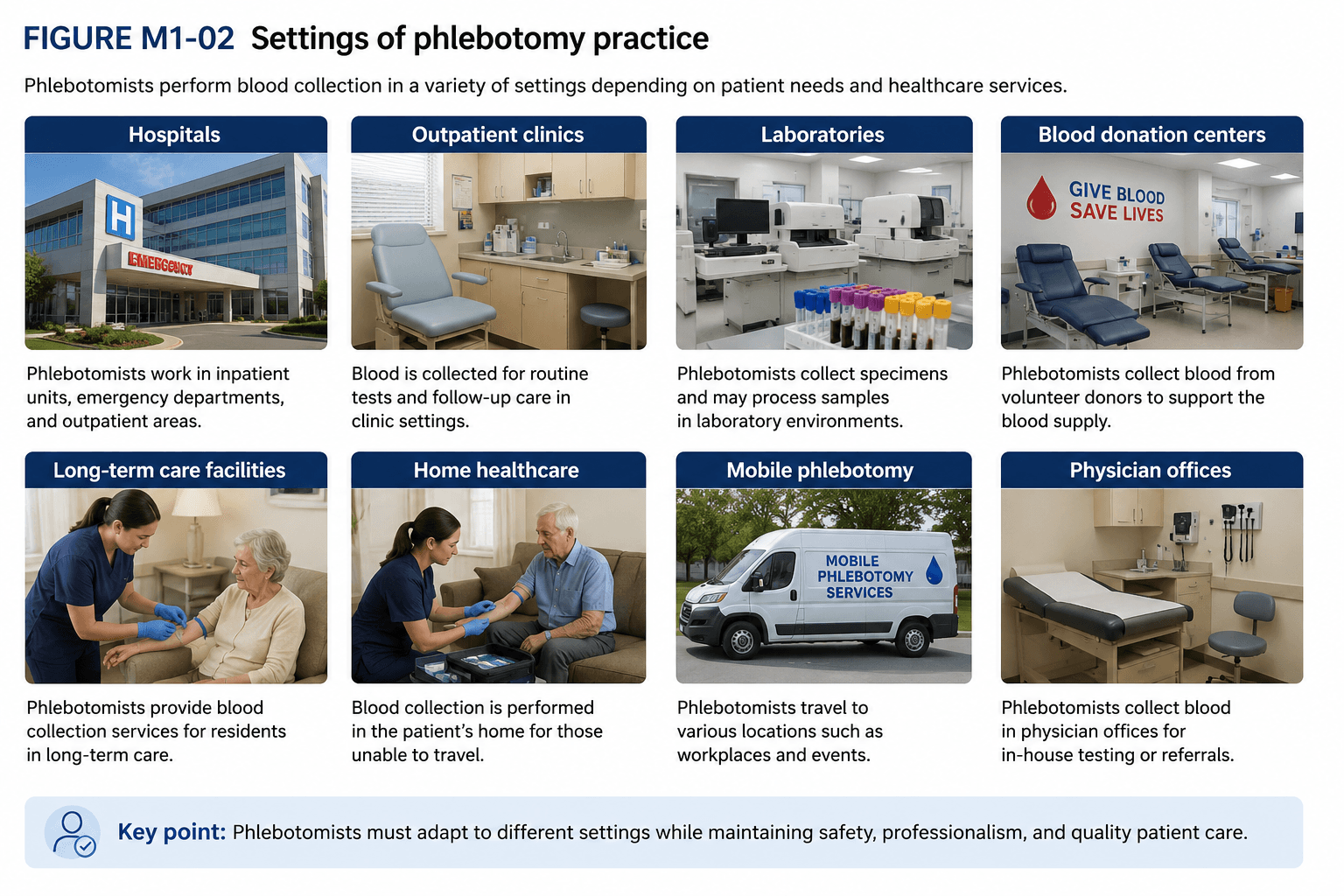
Where phlebotomists work
- Hospitals and medical centres
- Outpatient clinics
- Diagnostic laboratories
- Blood donation centres
- Mobile health units
- Physician offices
Settings of phlebotomy practice